Table Of Content

Making a better product at a lower cost is a primary goal in manufacturing, whether for a single part, the entire product, or the assembly process. DFM principles for manufacturability help product designers choose the methods for making a part. The expected operating environment greatly affects a product’s quality standards. A PCB that needs to run in a dusty area must be built to higher specifications, especially with respect to heat tolerance and airflow. However, DFM principles require designers to ensure that quality goals are reasonable, as manufacturing costs are also a critical consideration. Engineers are left with very little wiggle room for cost reduction once the design is settled.
Look at the Manufacturing Process
And if that change wasn’t made until production, it could cost 100 times the amount of making the change during the design phase. This clearly shows the importance of having a team that is knowledgeable in all aspects of the design. What’s important here is to be sure that you are familiar with your manufacturing process and its advantages and limitations. DFM can be seen as a preventative measure in avoiding high costs and long lead times. To make the most of it means knowing the ins and outs of your particular use case, application and manufacturing process.
How to avoid common defects in injection molding
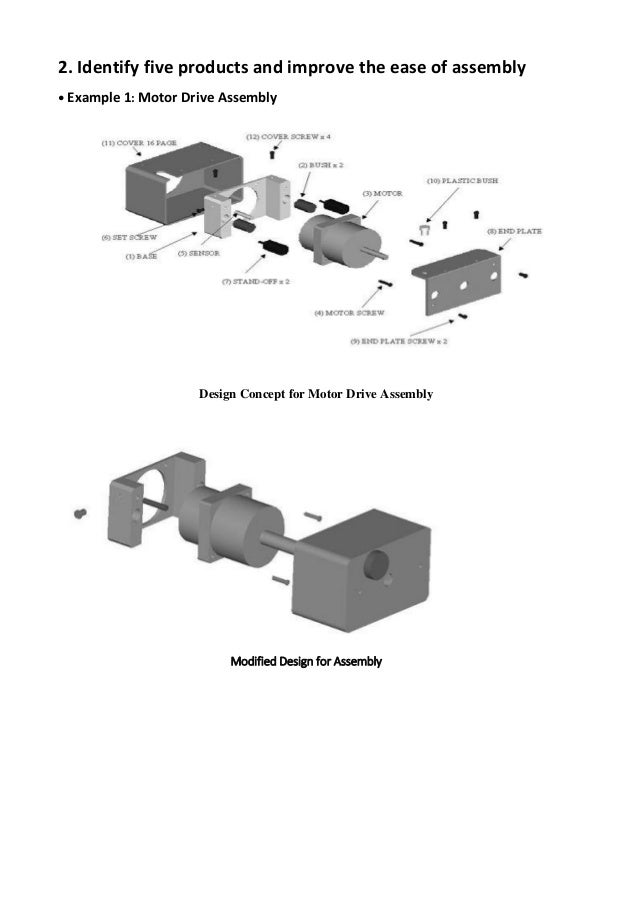
A cross-functional team comprising design, engineering, manufacturing, and quality assurance members can provide a well-rounded perspective on what is realistically manufactured. Regular meetings should be held to discuss DFM considerations and ensure everyone is aligned with these objectives. The concept of DFM traces back to the Industrial Revolution when mechanization and mass production techniques began to reshape manufacturing. During this period, the focus was primarily on improving production efficiency through standardization and mechanization of processes. Xometry provides a wide range of manufacturing capabilities, including machining and other value-added services for all of your prototyping and production needs. DFA stands for Design For Assembly and refers to the optimization of the product itself and the assembly process to reduce cost, effort and time.
How some CAD tools deliver automatic design for manufacturability results - TheFabricator.com
How some CAD tools deliver automatic design for manufacturability results.
Posted: Fri, 30 Jun 2023 07:00:00 GMT [source]
Analyze the Material
How GD&T Bridges the Gap Between Beautiful Design and Practical Manufacturing - ENGINEERING.com
How GD&T Bridges the Gap Between Beautiful Design and Practical Manufacturing.
Posted: Sun, 27 Aug 2023 07:00:00 GMT [source]
Successful DFM analysis will give you a design that is optimized for production, meaning you will enjoy reduced costs and increased efficiency without sacrificing the efficacy of your parts and products. While challenges like material availability, cost, and technological limitations exist, the integration of sustainable and eco-friendly principles into DFM is no longer an option but a necessity. It not only elevates product quality and marketability but also reflects a commitment to a greener future. One of the key advantages of 3D printing is its ability to manufacture components with minimal material waste. This aligns well with DFM principles of optimizing resource utilization and reducing environmental impact.
What are the benefits of DFM?
The variability becomes a critical issue not only for performance, but also for yield dropout. Standardizing components and processes where possible simplifies manufacturing and reduces costs. To their benefit, however, the newcomers can also design the manufacturing process to meet their own needs a bit better, giving them more flexibility in the design process. Overall, though, it’s best to have your final process in mind when you’re working on your product. This is, typically, the final phase in design for manufacturability, because it will involve testing your finished product to meet the standards and customer requirements.

OUTCOMES OF AN EFFECTIVE DFM
There are so many things to consider and accomplish when designing a product for manufacturability. In fact, it’s always best to have manufacturing in mind when you’re designing the initial prototype. This is where making layout changes to your plant or redeveloping your receiving and storage systems will be most successful. Once you adjust for those things, the rest of your process will begin to fall in line better and you can make decisions about the rest of the changes you need with those in mind. For instance, there is less concern of using sturdy materials if you have already redesigned the warehouse so that each piece is in an individual bin instead of stacked up together.
Company
This mutual win for customers and precision machine shops makes DFM an essential element of contract manufacturing. In this article, we’ll take a look at the definition of undercuts, their purpose, applications, and tips for designing parts with them. The Protolabs Network quote building platform uses proprietary Design for Manufacturing (DFM) software to detect potential design issues before production begins, minimizing costs and mitigating potential delays. Choosing the right design software is also integral to the success of your part. For example, if you are designing a part for sheet metal fabrication, but don’t use software specific to that technology, your design may cause errors in Protolabs Network's auto-pricing process.
Broaden DFM scope
DFM will allow potential problems to be fixed in the design phase which is the least expensive place to address them. Other factors may affect the manufacturability such as the type of raw material, the form of the raw material, dimensional tolerances, and secondary processing such as finishing. Another aspect that can have a huge impact on the final product cost is the tolerances assigned to the product. Specifying unnecessarily tight tolerances can increase the costs in the form of extra machining time or it might add the need for a secondary machining process.
How Spirit Aerosystems Uses aPriori to Identify Early Cost Outliers
Product design is crucial to applying DFM principles in PCB manufacture because even minor modifications can greatly affect product costs and lead times. DFMA applies these techniques to a company’s standard production line to create a product that is easy to manufacture and assemble. It may use integrated product development disciplines such as concurrent engineering to bring down costs and improve product reliability. It is important to distinguish between realistic and unrealistic expectations to reduce manufacturing costs. A product that will be used only in dry areas over its lifetime does not need marine-grade specifications.
The benefit to this, however, is that if they are run successfully and not destroyed, you can sell them or offer them as trial products to customers. You can read more about testing prototypes and final products in some of the other blog posts on this site, but this will finalize if you have done the previous steps properly. There are certain limitations on this, so it requires some creative thinking, as well as a thorough plan of action.
These trends shift the focus toward customization, sustainability, and highly efficient production processes. Design for manufacturing (DFM) is the process of efficiently engineering or designing a product, usually in the product design phase, to lower production costs. DFM reduces the requirement for expensive production changes by preventing errors and discrepancies through early resolution of manufacturability concerns. Design for Manufacturing (DFM) is the process of designing parts, components or products for ease of manufacturing with an end goal of making a better product at a lower cost. The acronym DFMA (Design for Manufacturing and Assembly) is sometimes used interchangeably with DFM.


No comments:
Post a Comment